Monopoutre ou bipoutre : comment choisir
Une comparaison concrète entre ponts roulants monopoutre et bipoutre — capacité, hauteur de levage, coût et cycle de travail — pour spécifier le bon appareil.
Par Équipe d'ingénierie Sanomac
L'une des premières décisions au moment de spécifier un pont roulant est de choisir entre une conception monopoutre et bipoutre. Les deux sont des configurations éprouvées et conformes aux normes — le bon choix dépend de la capacité, de la hauteur de levage, du cycle de travail et du budget.
Quelle est la différence ?
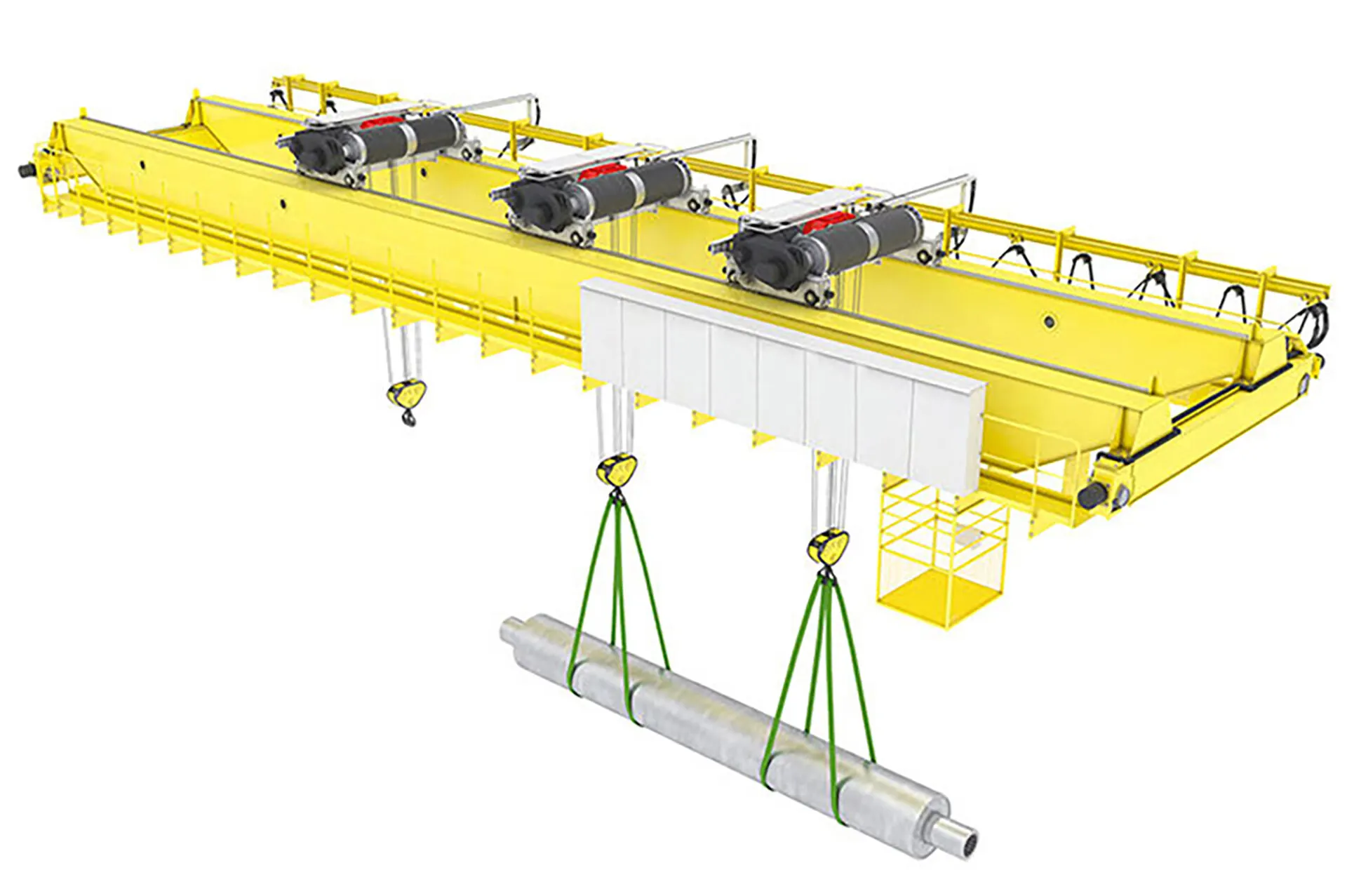
Un pont roulant monopoutre utilise une seule poutre principale, le chariot du palan roulant sur l'aile inférieure (suspendu). Un pont roulant bipoutre utilise deux poutres, le chariot roulant sur des rails posés au-dessus, entre les deux.
Capacité et portée
Le monopoutre est le choix économique jusqu'à environ 20 tonnes et des portées allant jusqu'à 30 m. Au-delà — ou pour de très grandes portées — le bipoutre apporte la rigidité nécessaire. Les ponts bipoutres restent praticables jusqu'à 500 tonnes.
Hauteur de levage (hauteur au crochet)
Comme le chariot repose sur les poutres, un pont bipoutre gagne de la hauteur au crochet — précieux lorsqu'il faut lever au plus près de la toiture. Le monopoutre, avec son chariot suspendu, cède un peu de hauteur mais réduit le poids total de la structure.
Cycle de travail
Pour un service léger à moyen (A3–A5) — typique des ateliers et des entrepôts — le monopoutre est idéal. Pour un service lourd et intensif (A6–A8), comme en aciérie ou en fonderie, choisissez le bipoutre.
Coût
Les monopoutres coûtent moins cher à l'achat, à l'installation et en voie de roulement, parce qu'ils sont plus légers et imposent des charges par galet plus faibles au bâtiment. Les bipoutres coûtent davantage mais offrent une capacité, une hauteur et une durabilité qu'un monopoutre ne peut pas atteindre.
Impact sur la voie de roulement et le bâtiment
La comparaison ne s'arrête pas à l'appareil. Un monopoutre est plus léger, donc il transmet des charges verticales et latérales plus faibles à vos poutres de roulement et à vos poteaux. Dans un bâtiment existant, cette différence tranche souvent la question : un bipoutre de même capacité peut imposer un renforcement de la voie, et ce génie civil coûte parfois davantage que l'écart de prix entre les deux appareils.
Demandez tôt à votre fournisseur la charge maximale par galet et l'empattement. Votre ingénieur structure a besoin des deux valeurs avant d'arrêter une conception, et un fabricant incapable de les fournir rapidement est un signal d'alerte.
Accès pour la maintenance
Sur un bipoutre, le chariot roule au-dessus des poutres : une passerelle peut donc courir le long du pont et la mécanique du palan reste accessible depuis l'appareil lui-même. Sur un monopoutre, le palan est suspendu sous la poutre et l'entretien courant exige généralement une nacelle ou un échafaudage. Si l'appareil tourne en deux ou trois équipes, cette différence compte sur vingt ans de vie.
Palans auxiliaires et accessoires spéciaux
S'il vous faut un second crochet, plus petit, pour basculer ou retourner une charge — courant en sidérurgie et métallurgie et dans les ateliers d'usinage — le pont bipoutre laisse la place pour le monter. Bennes preneuses, palonniers à électro-aimants, crochets tournants et crochets en C s'y logent également bien plus facilement. Un monopoutre accepte des accessoires, mais la marge de charge utile et de hauteur libre est plus serrée.
Où chacun trouve sa place en pratique
La plupart des ponts roulants que nous livrons à des centres de distribution et à des ateliers généraux sont monopoutres, typiquement de 5 à 16 t sur des portées de 15 à 25 m. Presque tout ce qui dépasse 32 t, et tout ce qui alimente un four ou une ligne de coulée, est bipoutre. Le pont européen FEM/DIN se place entre les deux : une conception monopoutre à sommier compact et palan à faible hauteur perdue, qui récupère l'essentiel de la hauteur au crochet qu'un monopoutre classique abandonne.
Règle rapide
- Choisissez le monopoutre si : capacité ≤ 20 t, service léger ou moyen, budget contraint, hauteur libre standard.
- Choisissez le bipoutre si : capacité > 20 t, service lourd ou continu, besoin de hauteur au crochet maximale, ou palan auxiliaire.
Cinq questions à trancher avant de demander un devis
- Quelle est la charge unitaire la plus lourde, et à quelle fréquence est-elle levée ?
- Quelle est la portée entre rails, et la voie est-elle existante ou neuve ?
- Quelle hauteur libre reste-t-il sous la charpente ?
- Combien de levages par heure, sur combien d'équipes ?
- Aurez-vous un jour besoin d'un second crochet ou d'un accessoire particulier ?
Répondez à ces cinq questions et le choix de la poutre se fait généralement tout seul. Envoyez-nous capacité, portée et exigences de service : nos ingénieurs vous recommanderont la configuration la plus économique — y compris si un monopoutre de type européen peut faire le travail pour lequel on vous a chiffré un bipoutre.